
Dehmer Strasse 58-66
32549 Bad Oeynhausen
br>Tel.: +49 5731753-0
Email: info@denios.ie
Internet: www.denios.ie
IBC Tanks
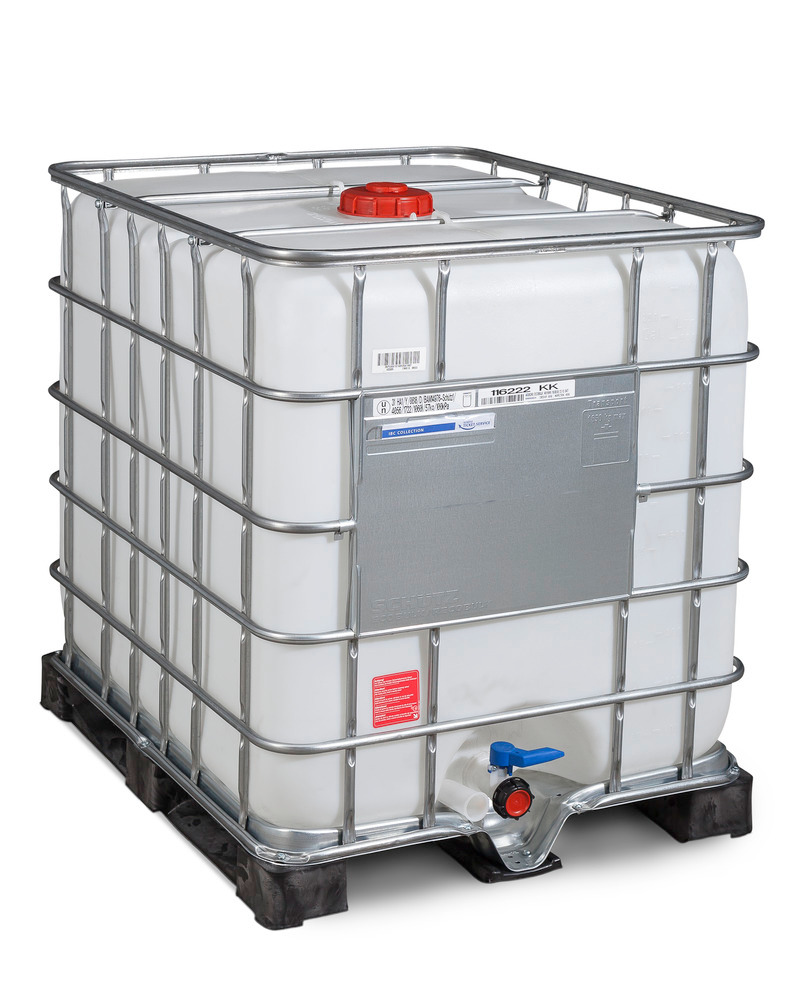
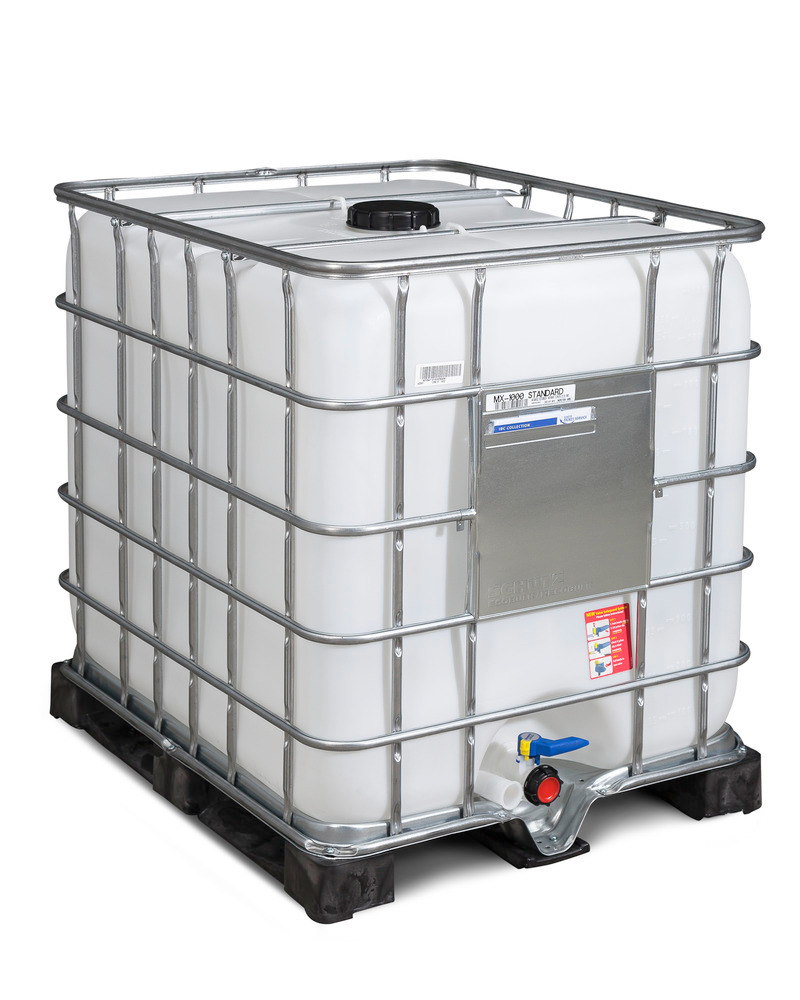
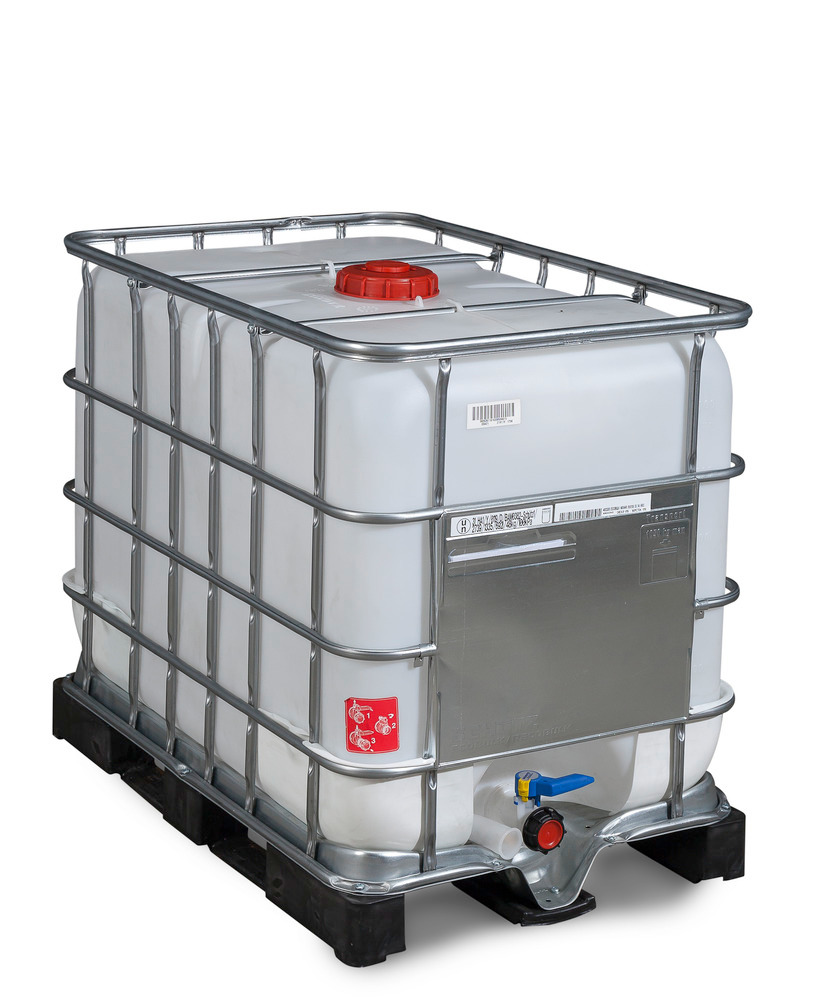
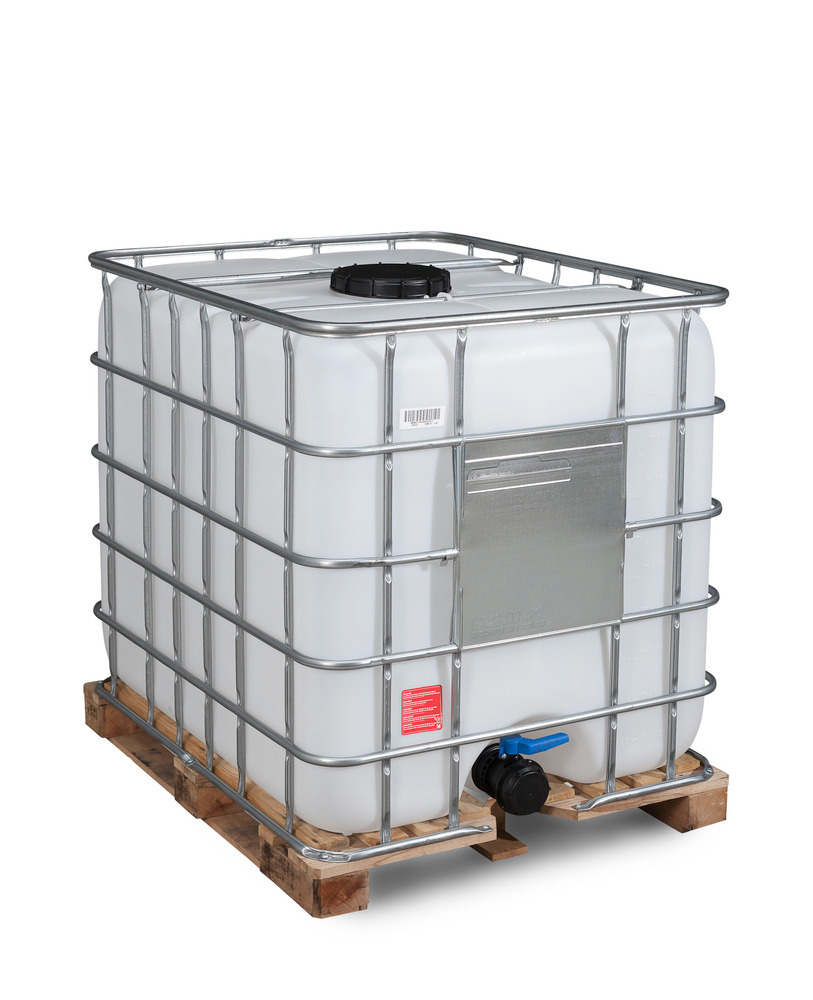
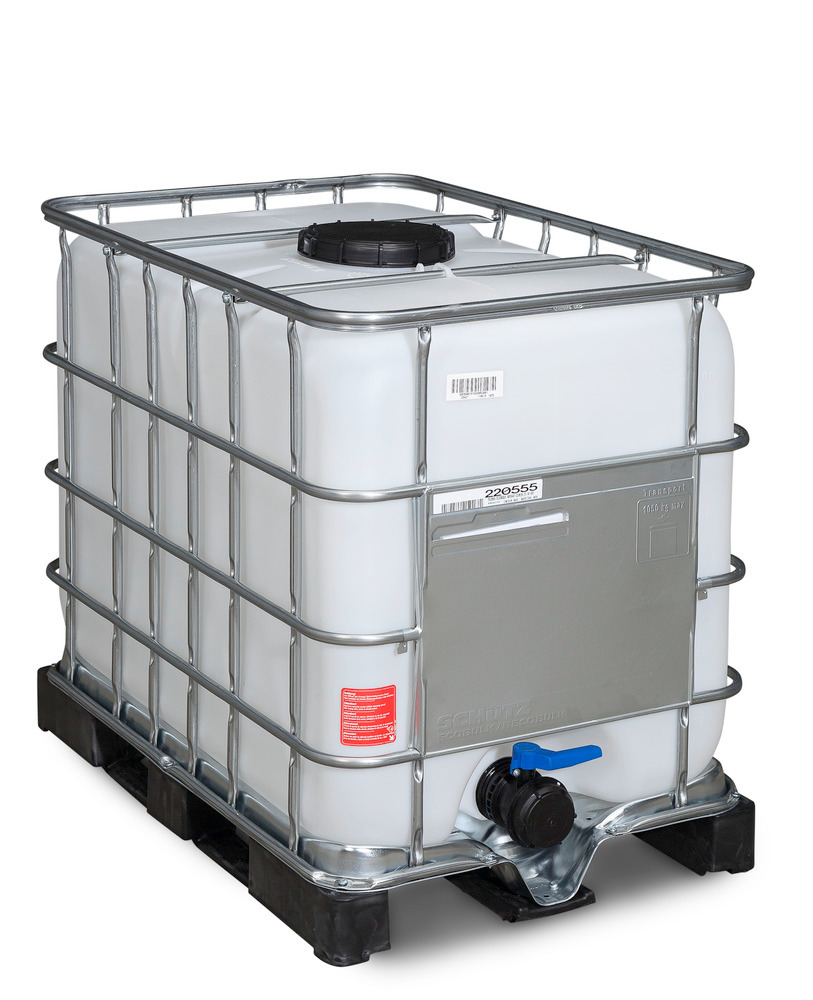
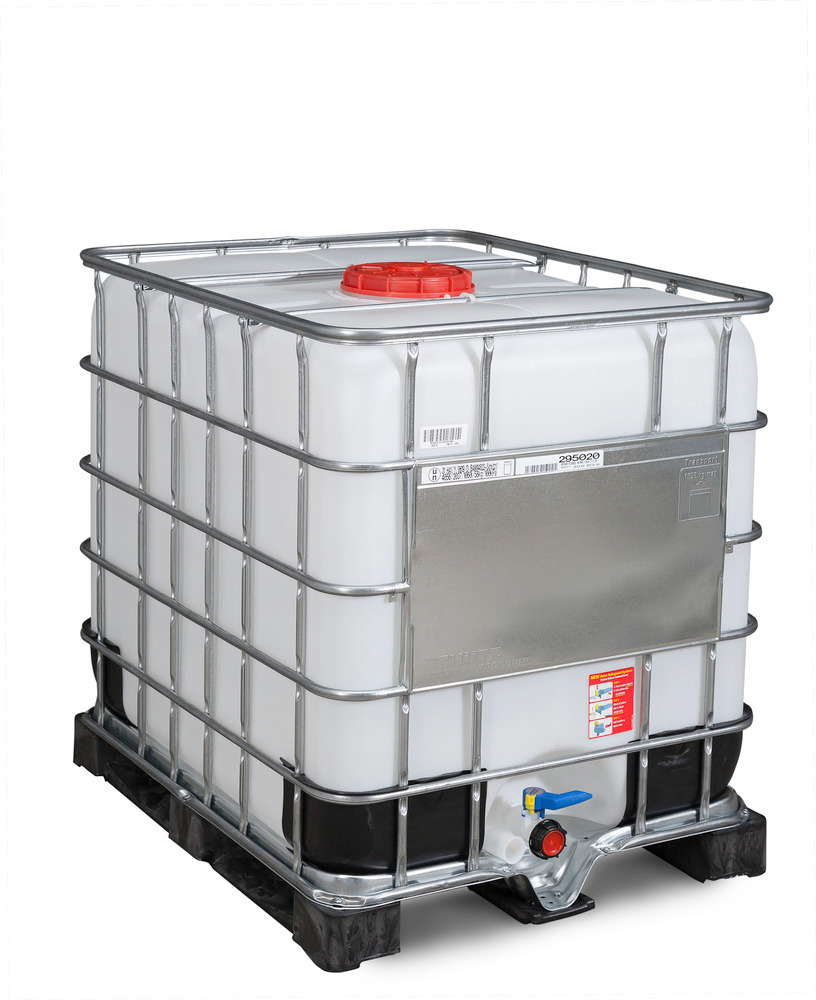
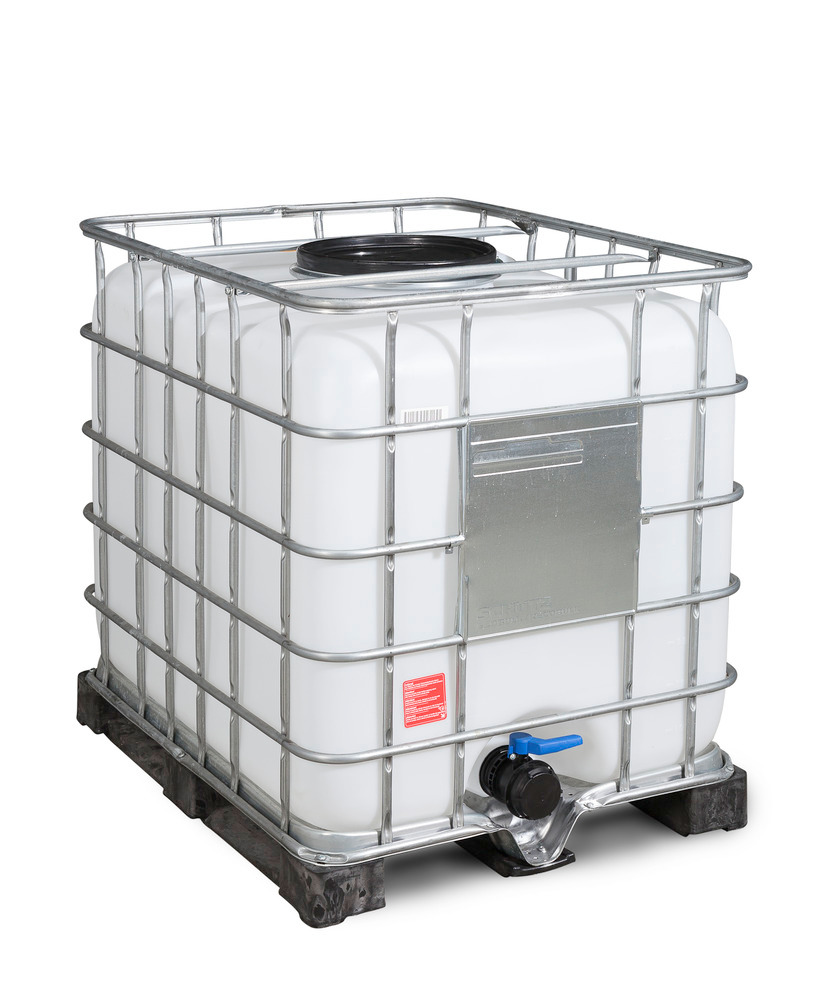
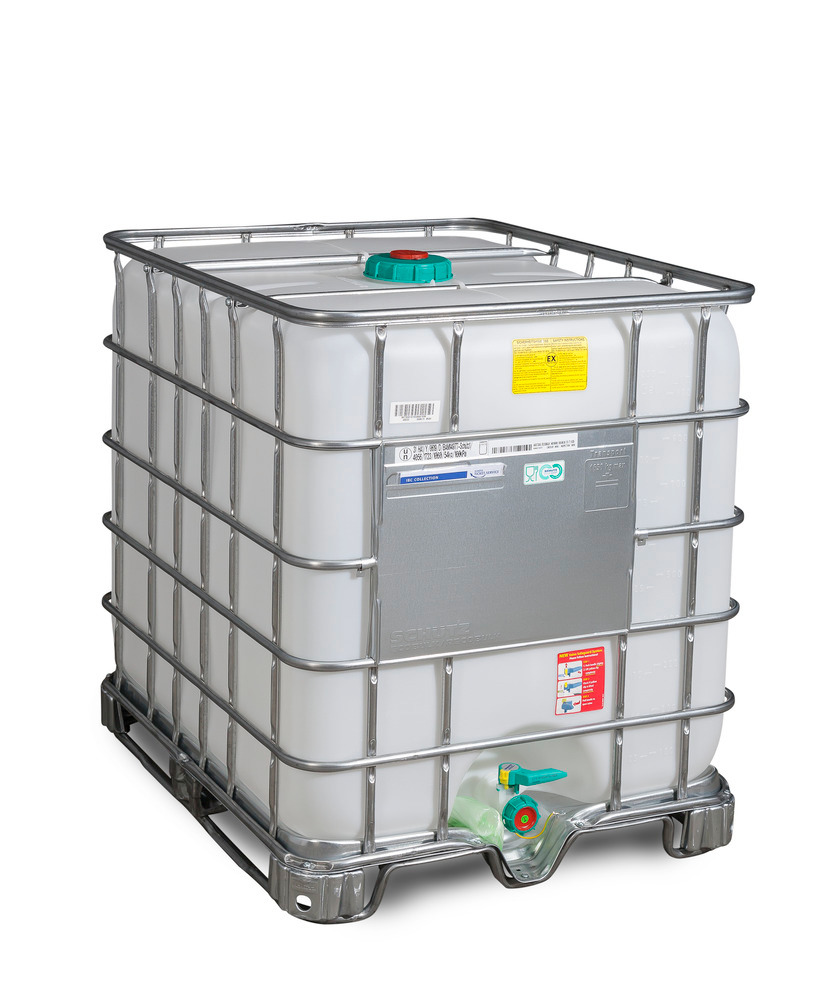
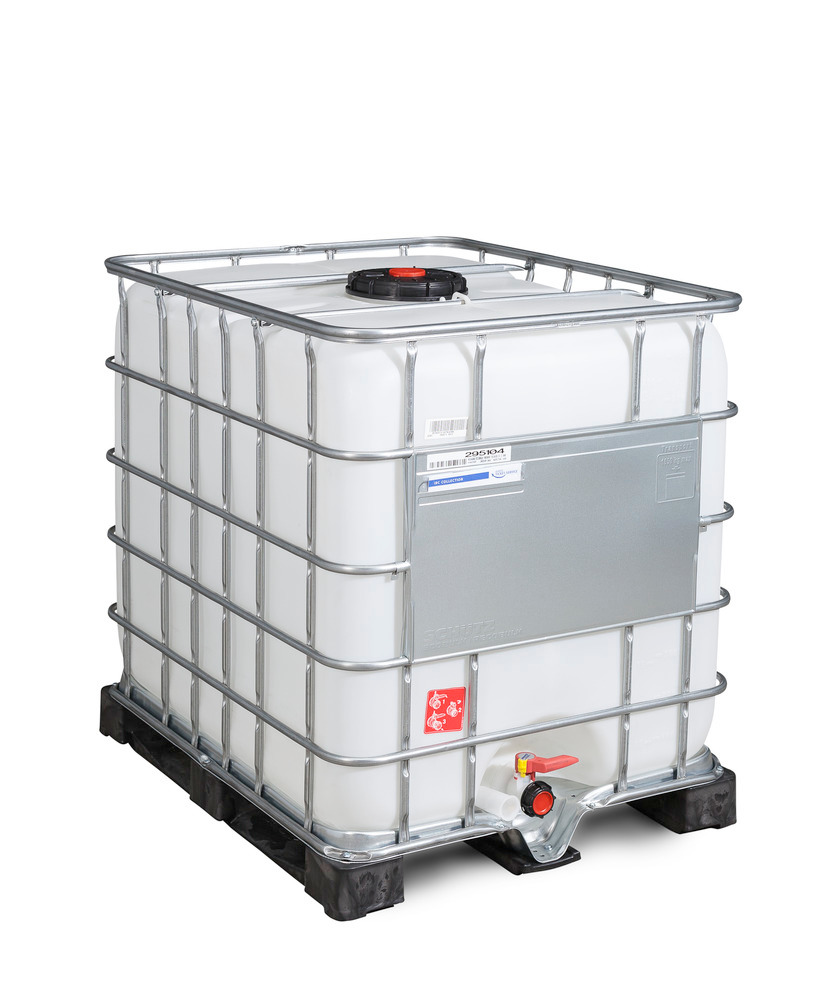
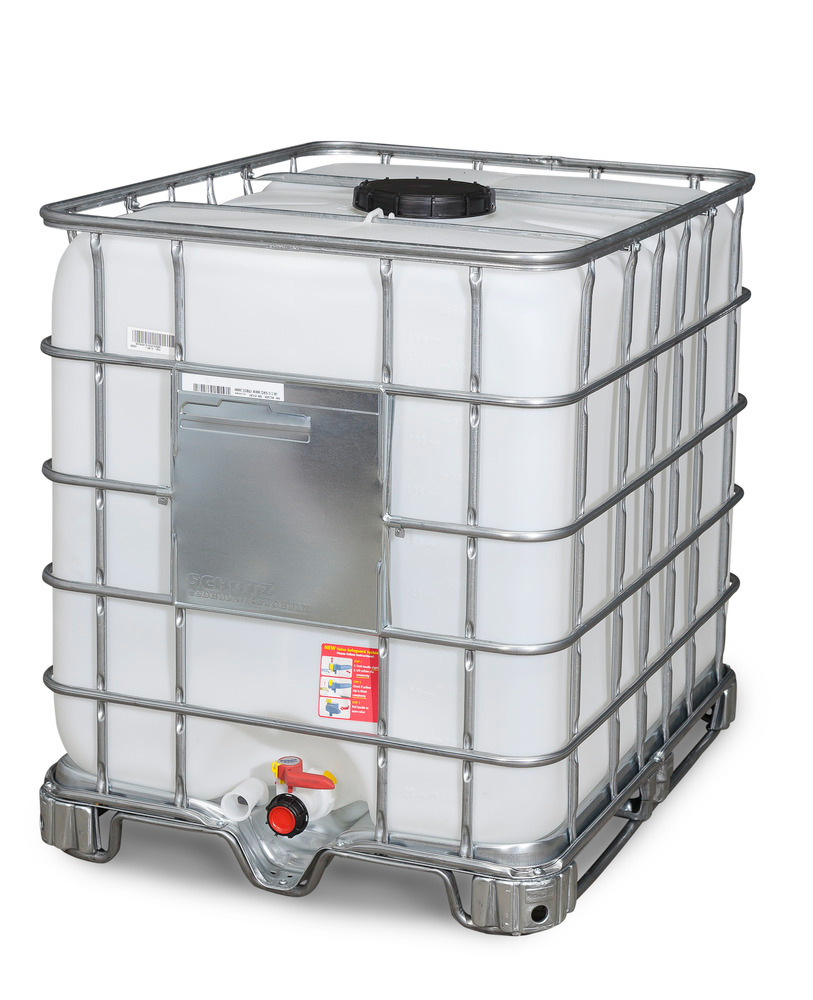
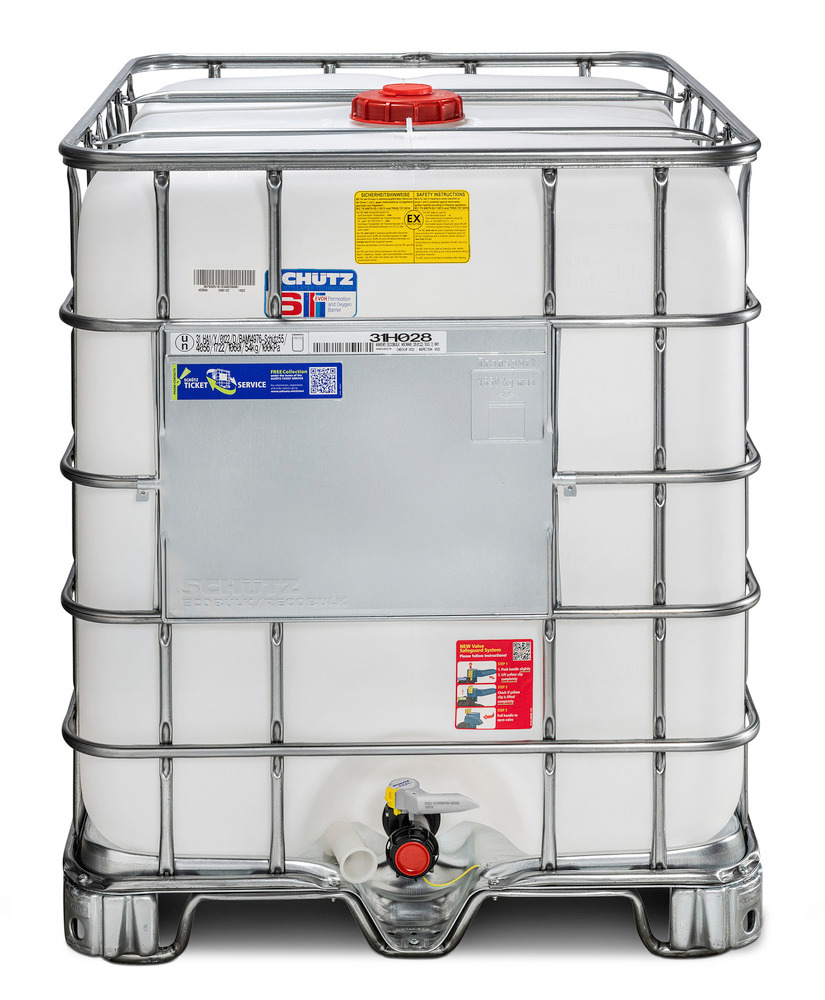
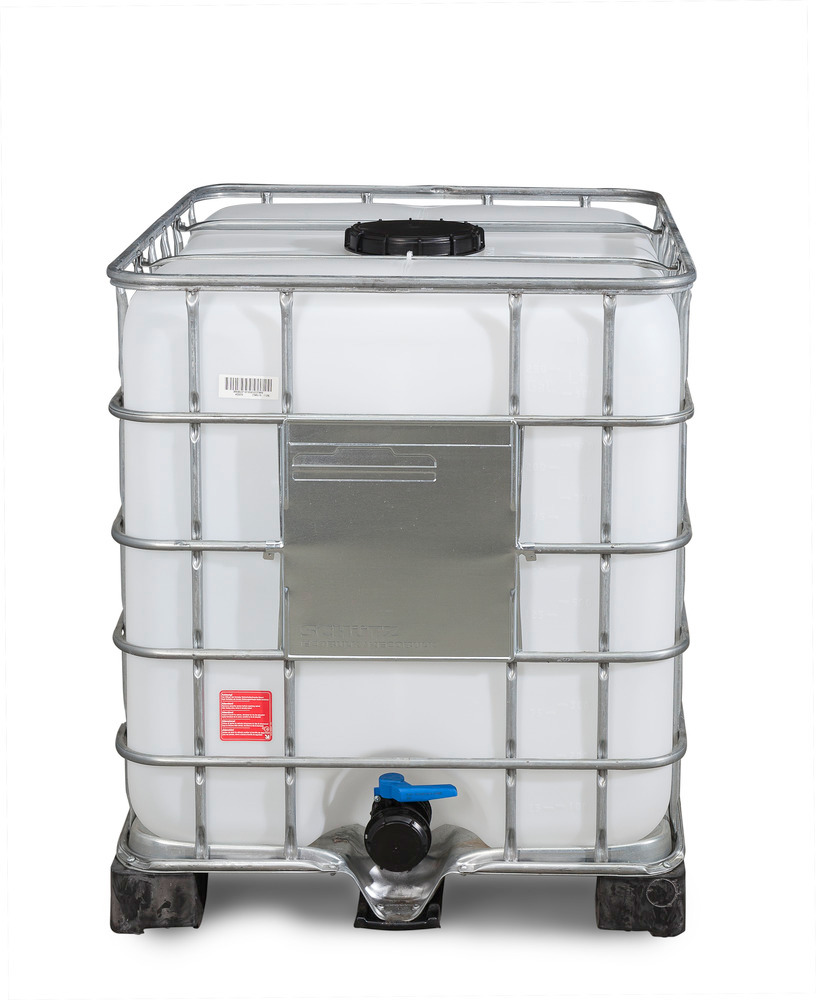
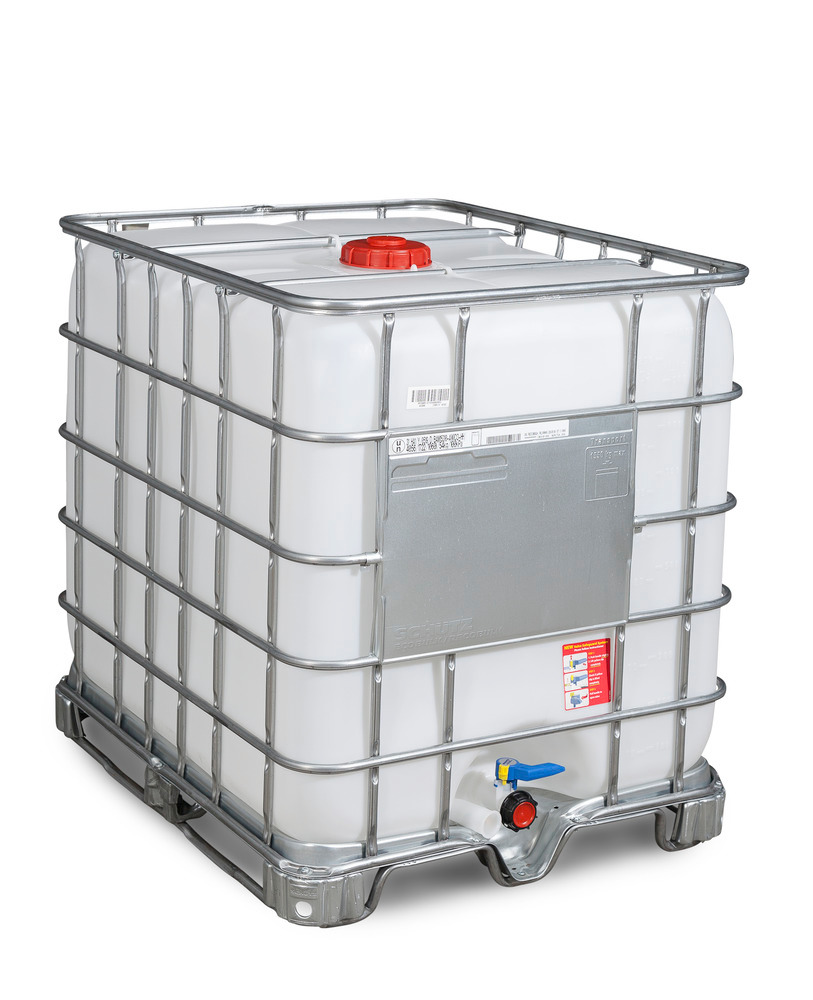
(75 Article)IBC is an abbreviation for Intermediate Bulk Container, also known as IBC Tank or IBC Tote. This reusable industrial container is designed for the transport and storage of granulated and bulk liquids, including food ingredients, chemicals, solvents and pharmaceutical products.
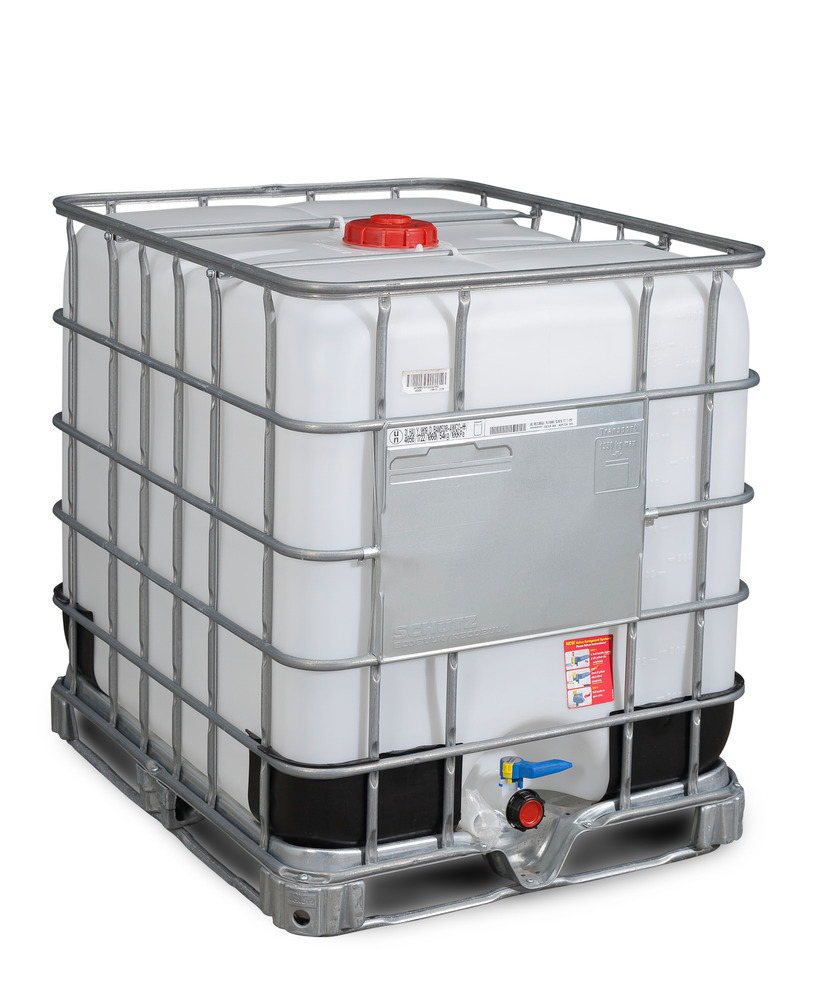
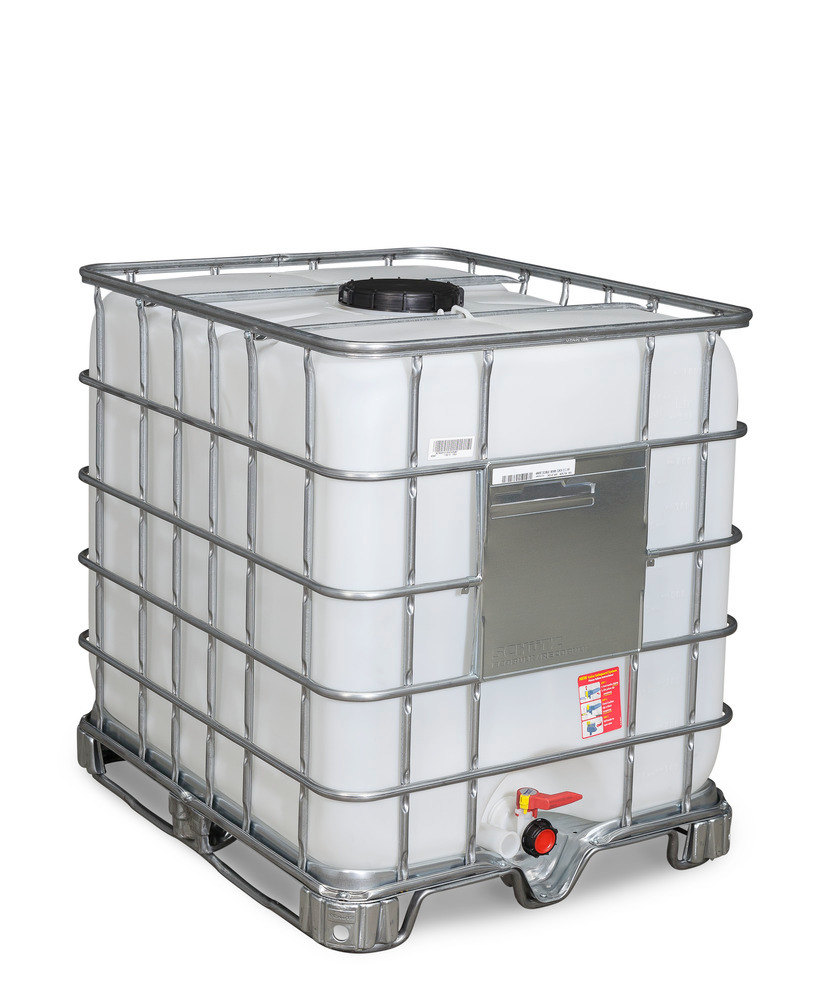
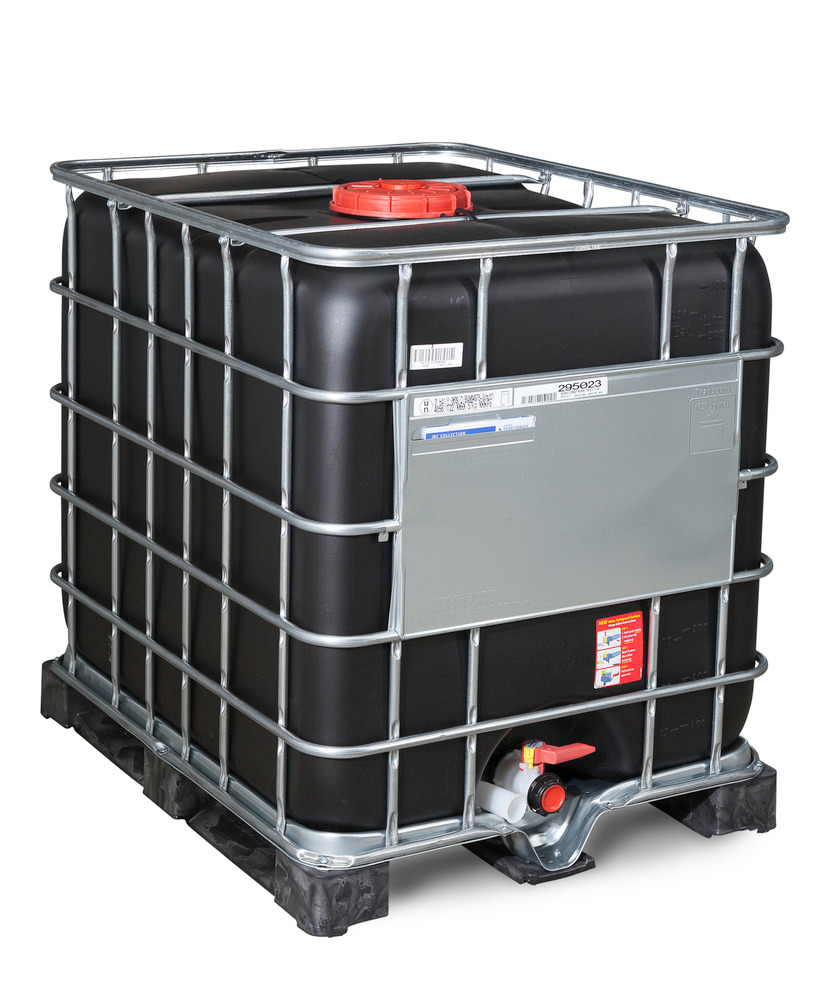
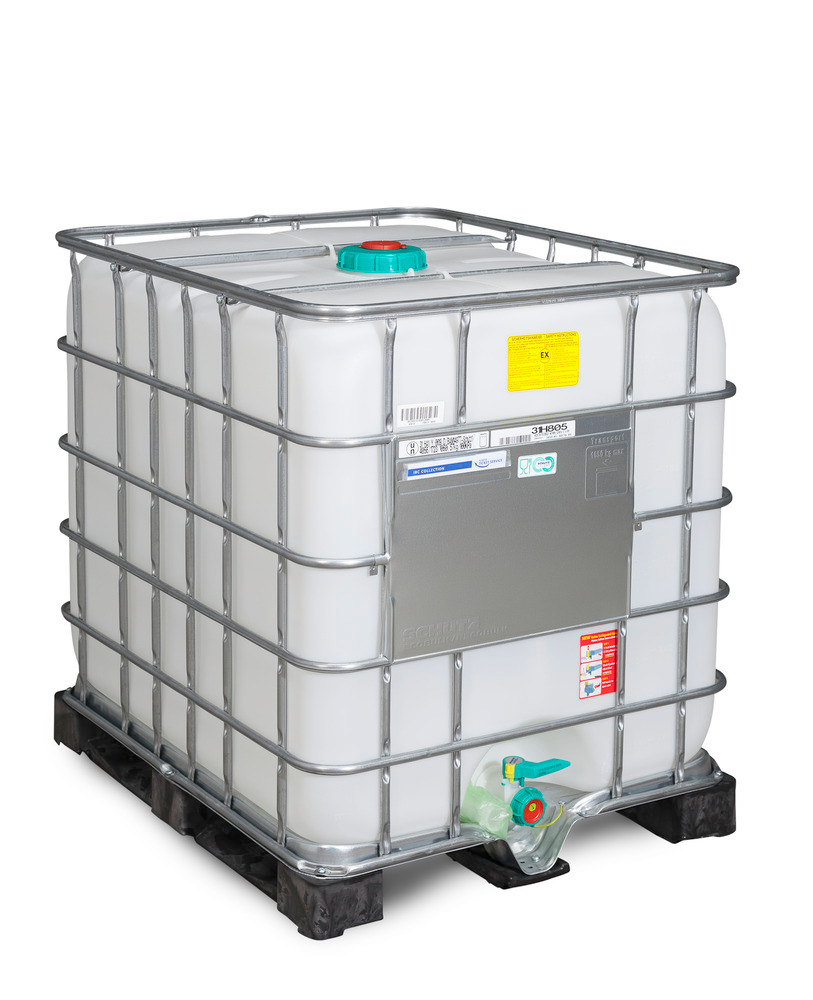
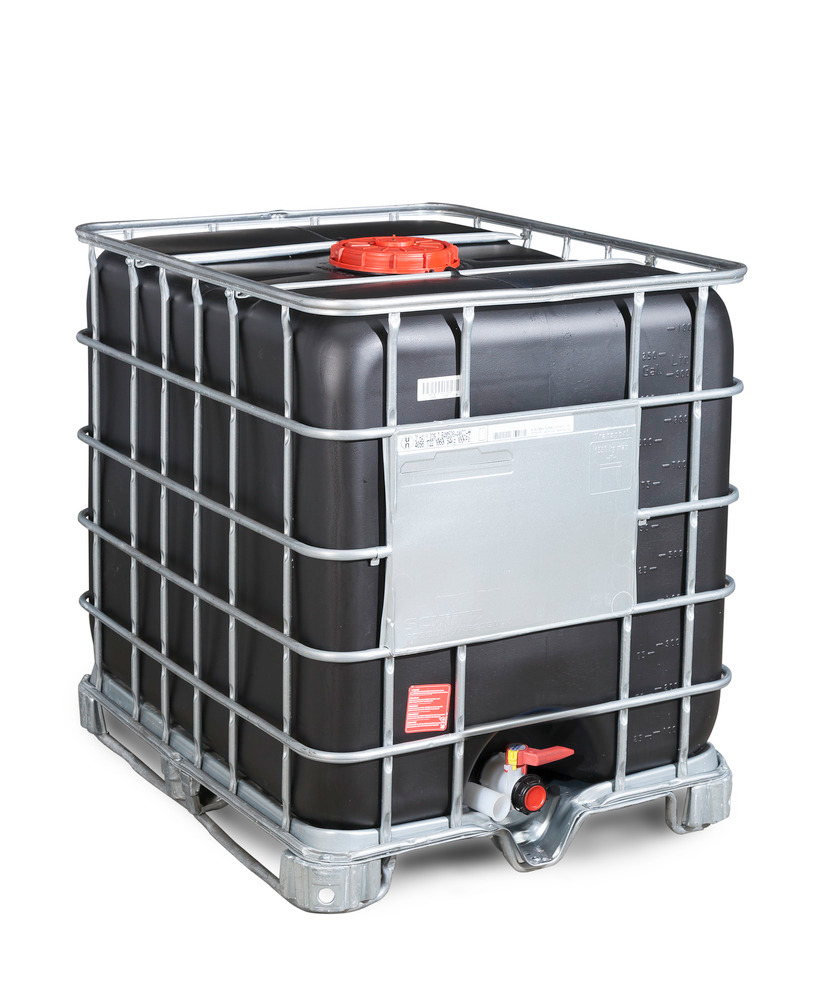
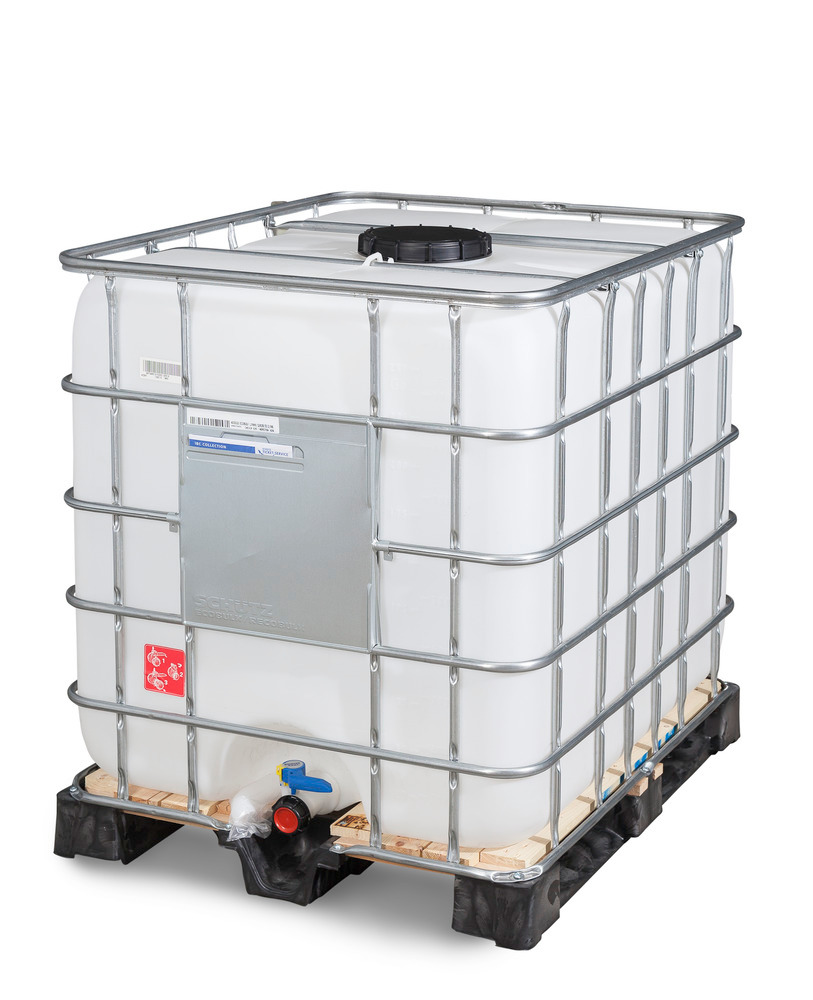
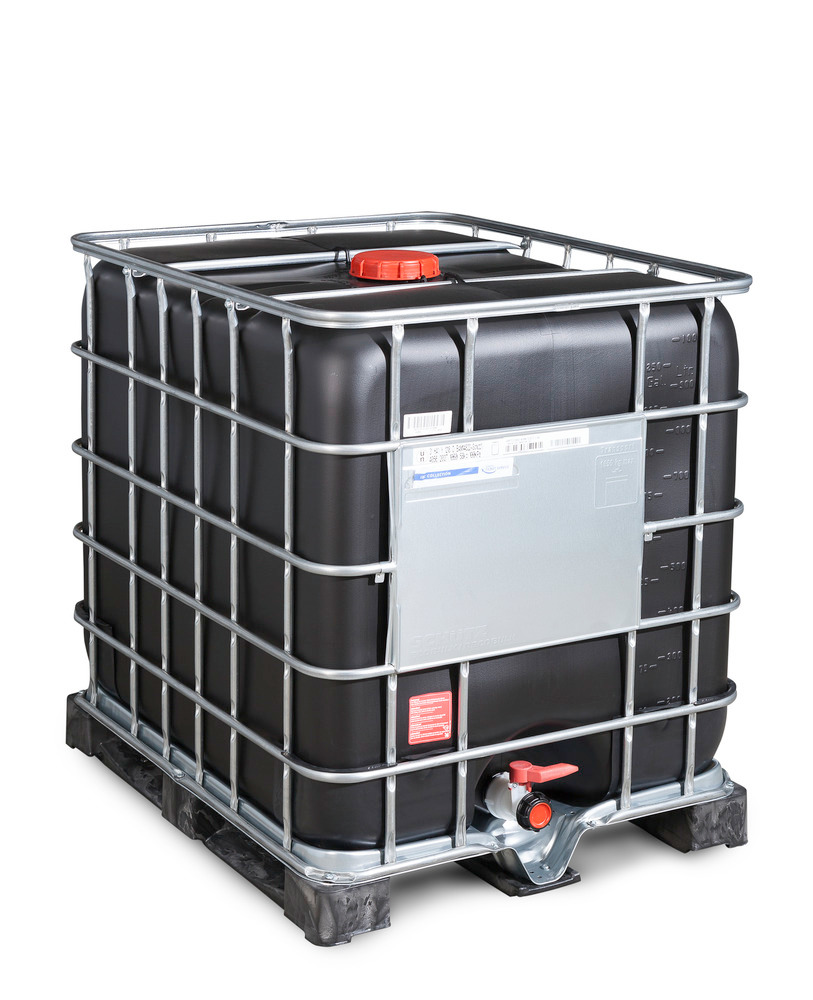
28 from 75 products shown

IBC tanks from DENIOS Ireland
Briefly explained: the intermediate bulk container
It is hard to imagine the landscape of manufacturing companies without them. Intermediate Bulk Container or IBC for short. When it comes to the transport of fluids and pourable substances, IBC tanks have long been established as the industry standard. In most cases, the IBC tank is made of plastic, stands on a pallet and is surrounded by a metal tube frame. This offers additional safety for the stored goods. The usual capacities are 500 to 3,000 liters, but the most common is the variant with a volume of 1,000 liters. Because of the cubic shape, the storage space can be used more economically than is the case with barrels.

IBC tanks
When transporting hazardous materials, their packaging, including IBCs, have to be safe enough to resist the stresses of normal transportation conditions. Thanks to their robust construction, IBC tanks are ideal for use in the transport of dangerous goods. They are suitable for liquid goods of packaging groups II and III, for flammable liquids in accordance with the Industrial Safety Ordinance and as collection and discharge containers.
What types of IBC tanks are there?
DENIOS Ireland offers various IBC tanks tailored to different requirements. The IBC tanks are available in the following versions:
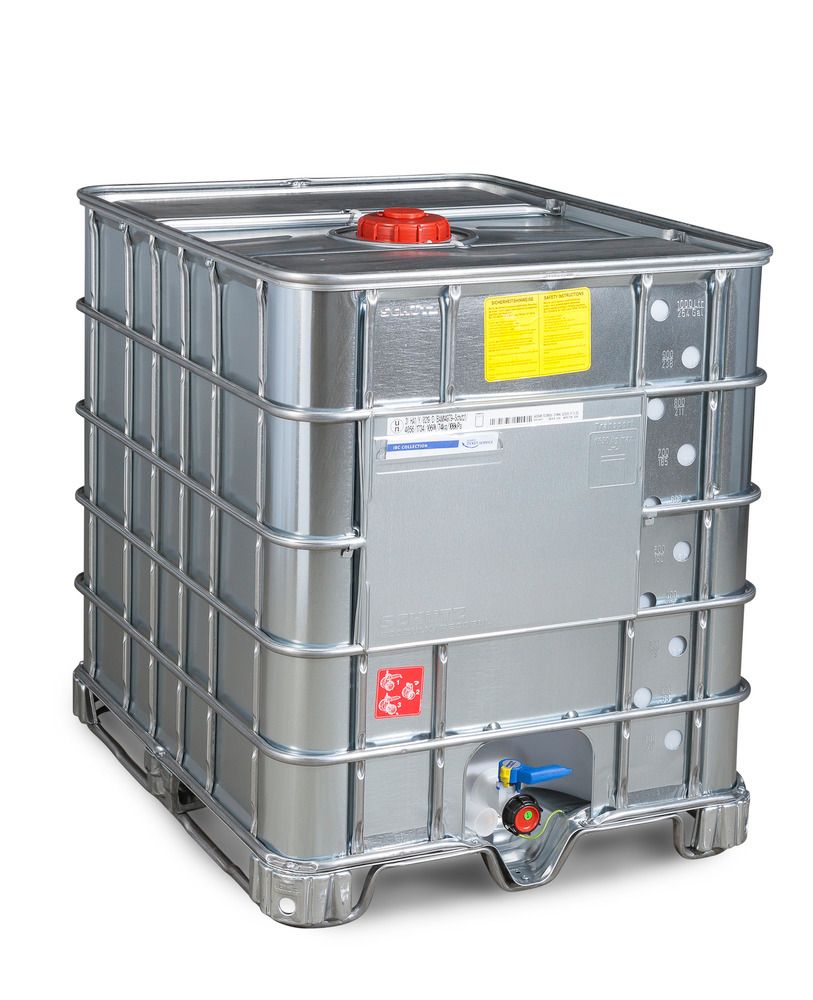
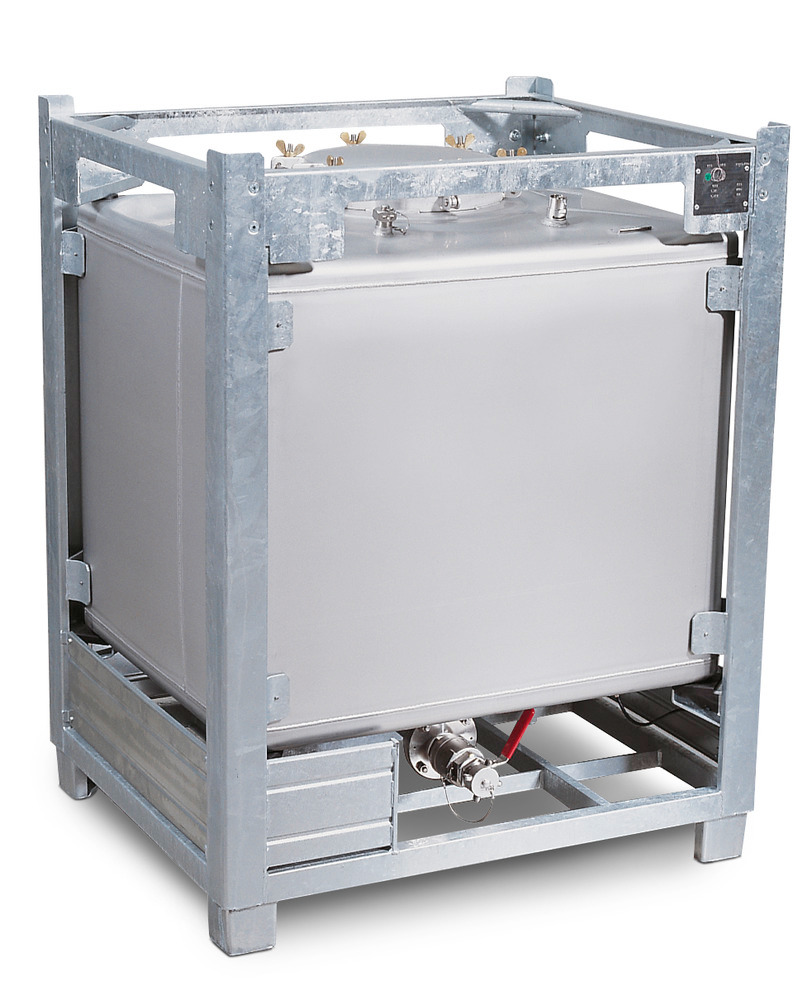
Made of stainless steel or plastic
From 600 - 1000 liters
2 different outlet openings
3 different filling openings
With PE / steel runners or wood pallet
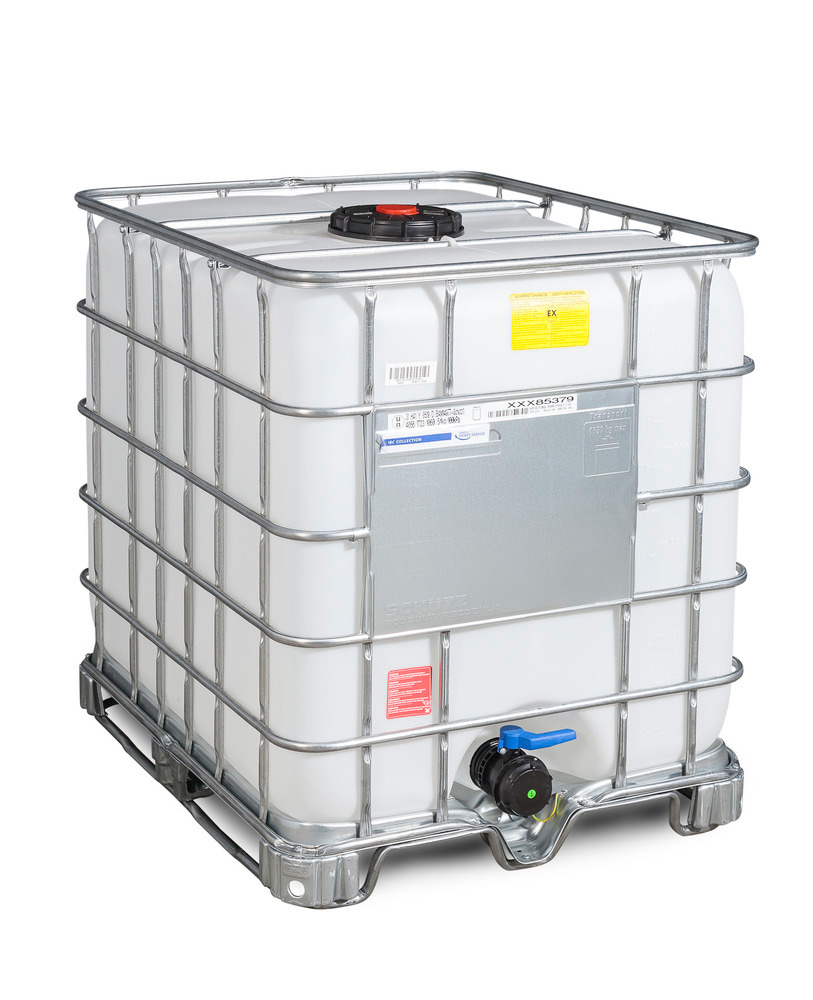
Versions for EX areas
In transparent or black colour with UV protection

IBC tanks in the food industry
Oils, fruit juices, fats, flavors or additives: IBC tanks are also used in the food industry. The highest hygiene standards apply in this area. The containers are therefore mainly made of stainless steel. In the food sector, the contents of storage containers are changed, exchanged or reloaded particularly often for production reasons. IBC tanks are very suitable for this due to their design and material. Even though the maintenance effort is not low, stainless steel can be cleaned almost without leaving residues. For this reason, IBC tanks in the food sector are mostly made of stainless steel.
No matter which material is used, it is often necessary to keep oils, additives or fats at a constant temperature level, particularly in the case of groceries. Production processes are not rarely dependent on this. DENIOS Ireland thermotechnology offers the right solutions for this, both on a small and large scale.

The right accessories for the IBC tank
A wide range of tools and professional accessories support you in your daily work with IBC tanks. IBC funnels, openers or pumps make daily work easier. If the IBC content has to be mixed and handled regularly, for example in the case of suspensions or emulsions, agitators and mixers are used. These are fixed directly in the opening of the IBC tank and, depending on the model, combine IBC pump and agitator. It should also be noted that the agitators should be matched to the medium, i.e. the content of the IBC, in order to achieve optimum working results. Ex versions are available as well. This means that nothing stands in the way of their use in sensitive working areas.
Related Content
- View your order history
- Save shopping list and basket
- Save preferred payment method for future orders
Give us a call or fill out the form and we will get back to you as soon as possible.
Calls are handled by our UK team. All sales are processed via our German parent company so are VAT* / tariff free where applicable. *Must be fully IE VAT registered