
Lithium-ion Cabinets
(12 Article in 27 versions)Proper lithium battery storage is essential for ensuring performance, longevity and safety. Incorrect storage can cause batteries to degrade at a faster rate thus reducing capacity and damaging the equipment they power. High temperatures, in particular, can increase the risk of overheating or thermal runaway.
Poor storage conditions may also create serious health and safety hazards, like leaks, toxic fumes or fire risks. This is especially important where multiple batteries are stored together.
By maintaining moderate temperatures and following safe storage practices, these risks can be minimised, protecting both equipment and people while extending battery life.


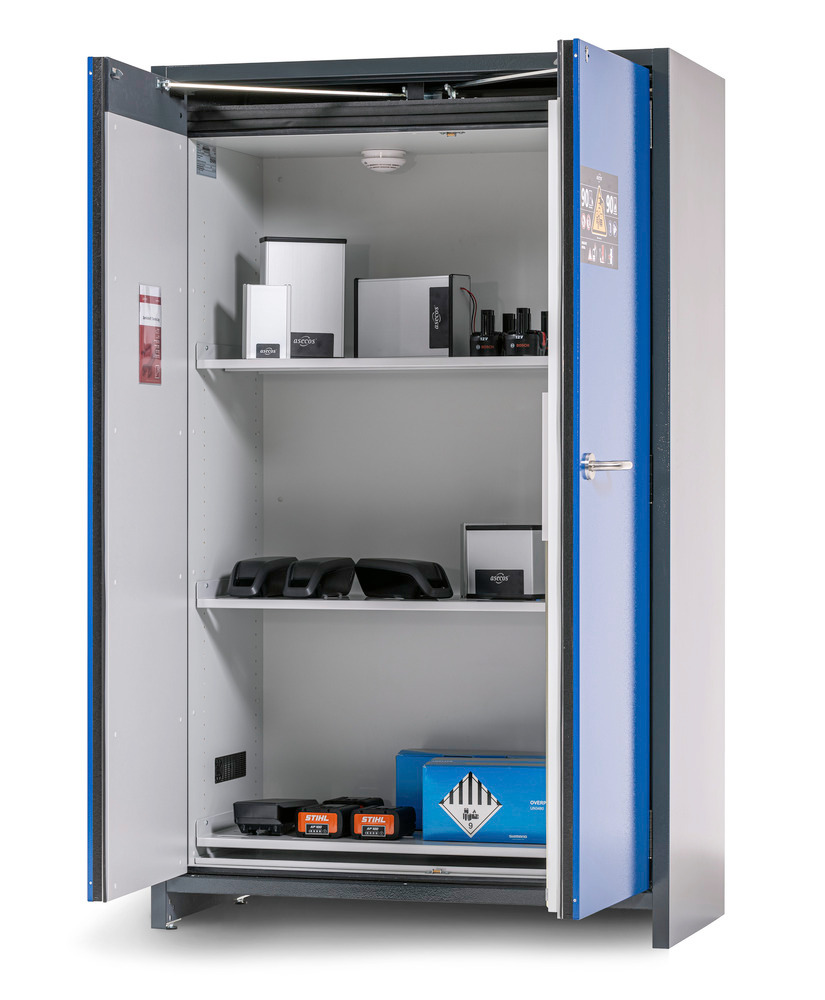
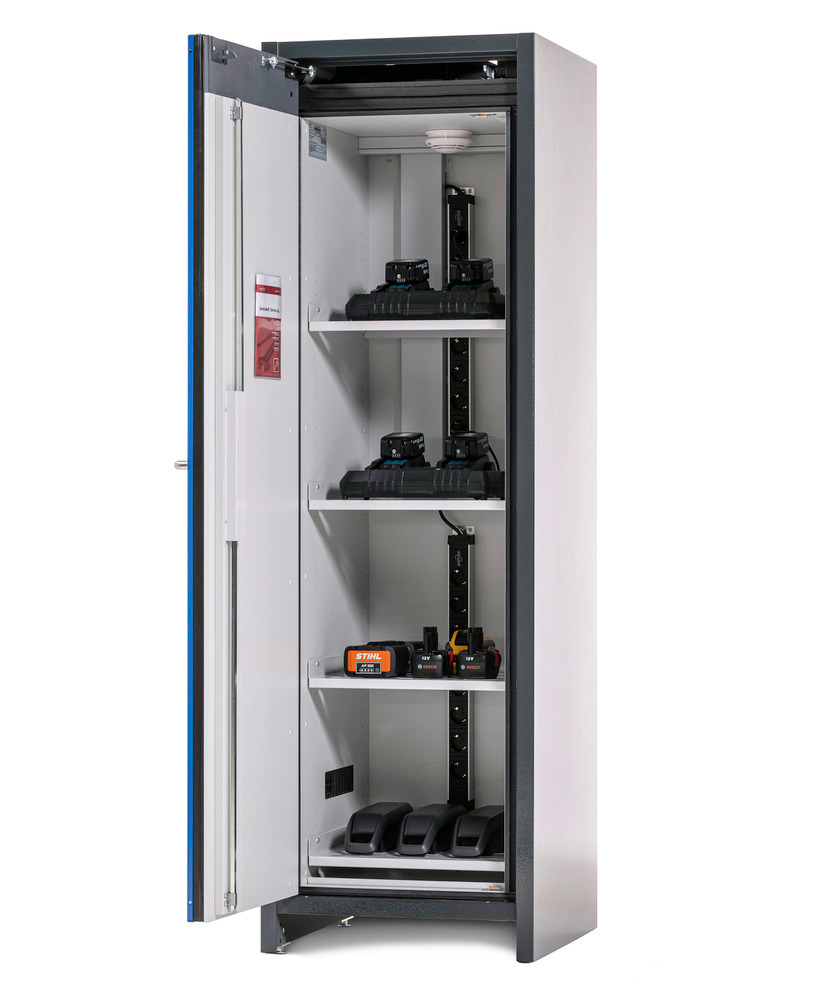
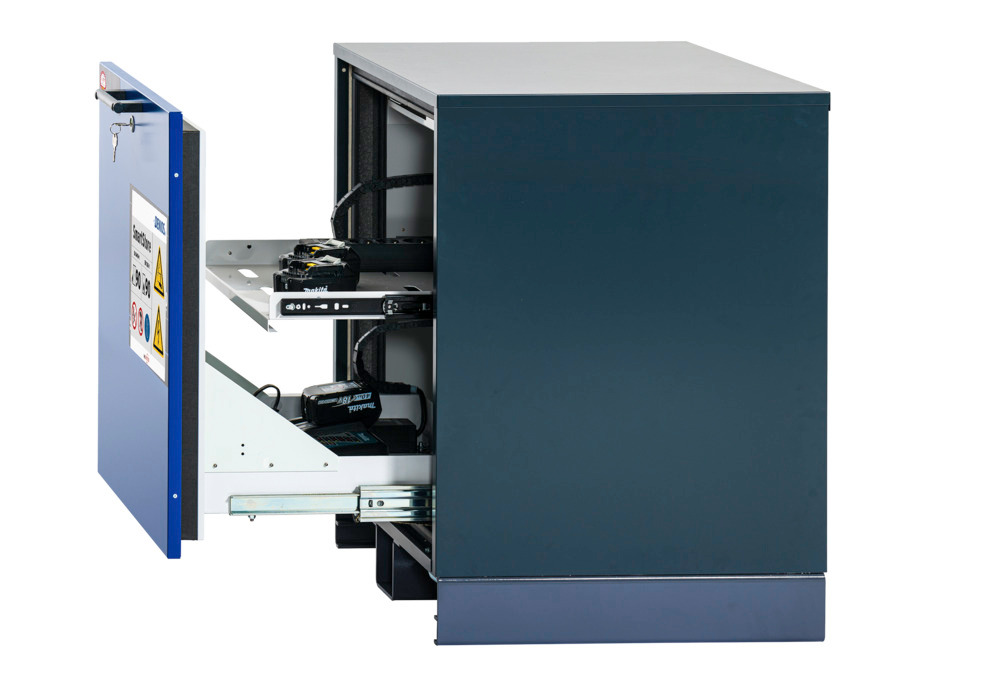
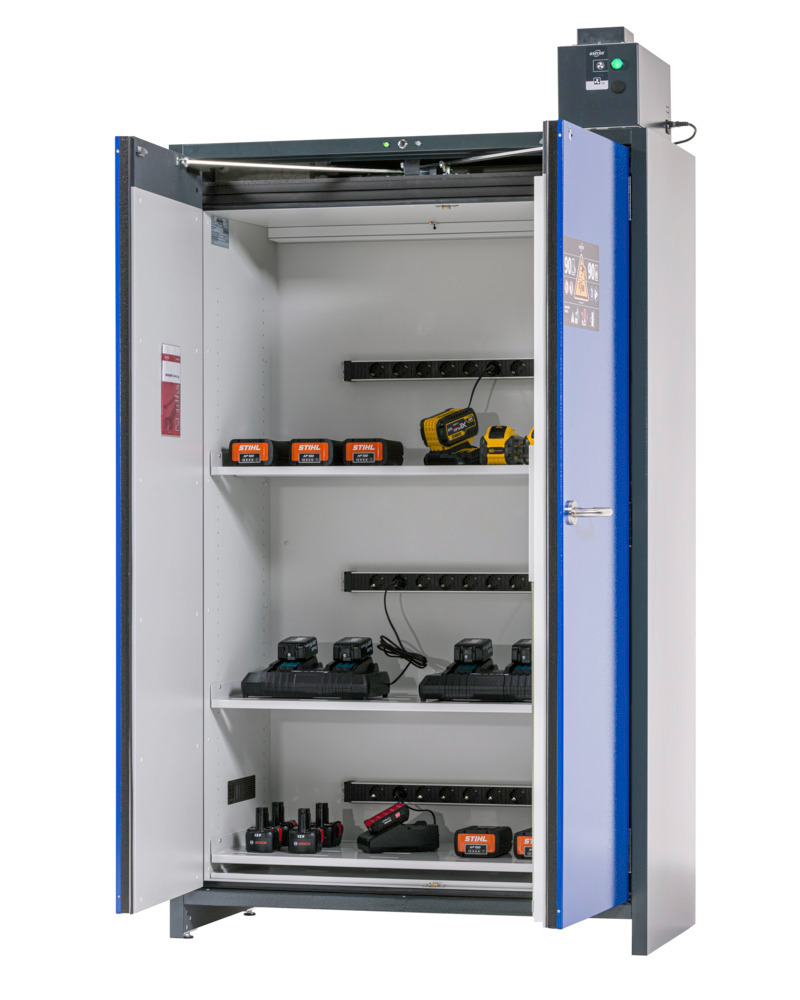
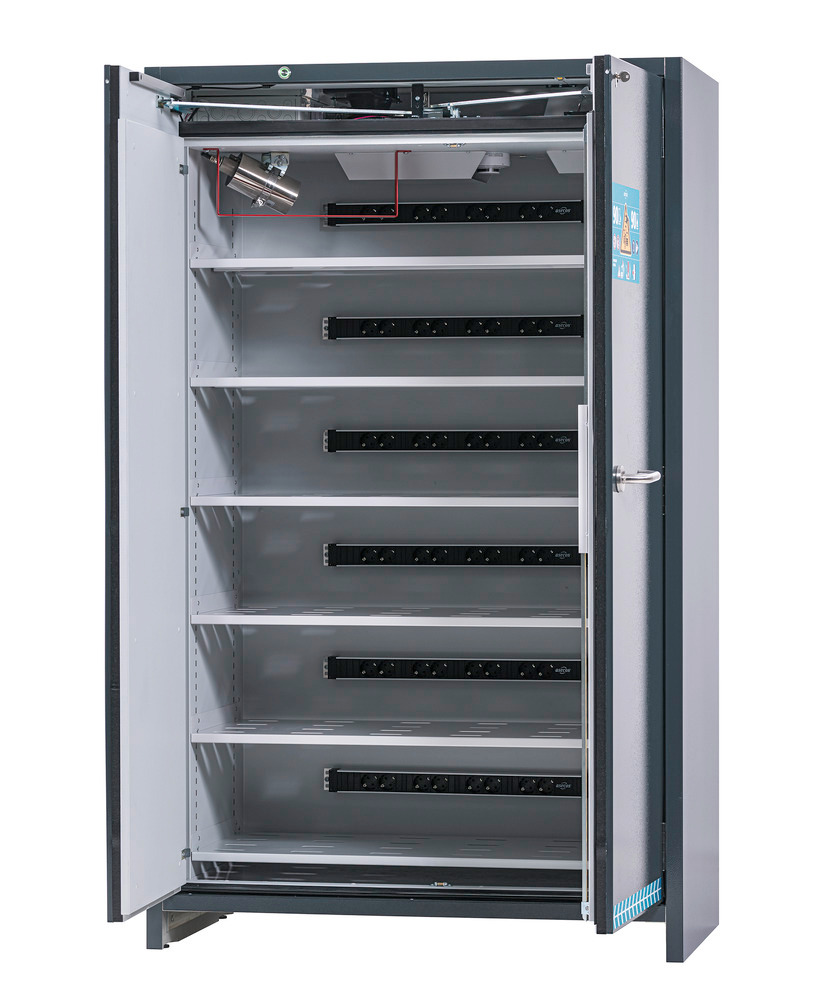


Lithium-ion Safety Cabinets from DENIOS
Understanding Lithium Battery Hazards
Lithium batteries contain high-energy-density, flammable and sensitive components, which can result in thermal runaway. This is an uncontrolled chain reaction where heat generated by the battery leads to further chemical reactions, producing greater heat that can cause fires and explosions.
Lithium battery hazards in the workplace include the following:
Fire risk: Lithium-ion batteries burn at extremely high temperatures, exceeding 700°C in some cases, and release flammable gases during failure that can easily ignite.
Battery damage: Crushing, puncturing or otherwise damaging the internal components of batteries can lead to internal short circuits, which can cause delayed thermal runaway.
Overcharging: Forcing excessive energy into the battery generates heat and increases pressure inside the battery, increasing the risk of fire.
Properly storing lithium-ion batteries in a safe, temperate environment is vital to prevent dangerous fires. Proper storage also allows for the earlier detection of fires or thermal runaway, enabling early intervention.

How Lithium-Ion Cabinets Improved Workplace Safety
DENIOS offers a range of lithium battery storage solutions, with a series of dedicated cabinets specifically for safe lithium battery storage. Thermal insulation, fire-resistant construction and controlled ventilation all help to protect your people and property, while built-in early warning systems allow rapid response to signs of thermal runaway.
Our cabinets help you align with recommended lithium-ion battery storage guidance while supporting the workplace health and fire safety duties established by the Health and Safety at Work etc. Act 1974 and the Regulatory Reform (Fire Safety) Order 2005.
Choosing the Right Lithium Battery Storage Cabinet
Some of the factors you’ll want to consider when choosing your lithium storage cabinet include:
Battery quantity: The number of batteries you’ll need to store will affect the size of the cabinet you require.
Available space: Our storage cabinets range from 600mm to 1200mm widths, suiting a range of available spaces in your facility.
Charging vs storage: We offer both storage cabinets and cabinets with charging functionality to meet your specific requirements.
Environmental factors: Lithium-ion batteries should be stored safely away from heat sources, making environmental placement an important factor.
Risk assessments: Your choice of cabinet should meet the necessary requirements defined in your risk assessment.
Industries That Benefit from Lithium Battery Storage
A wide range of industries that use lithium-ion batteries can benefit from appropriate storage to reduce risk on-site. These include:
Warehouses
Manufacturing facilities
Automotive factories
Laboratories
Universities
Healthcare
Telecommunications
Data Centres
Renewable energy
Aviation and aerospace
Lithium Battery Storage Options from DENIOS

SafeStore: The solid storage solution
SafeStore is built for businesses that want reliable lithium-ion battery storage without overcomplication. It provides a robust, easy-to-use and compliant solution that meets essential safety requirements. The key features include:
Durable construction with double-sided fire protection
Type 90 classification for up to 90 minutes of internal and external fire resistance
Compact design suitable for workshops and small facilities
Compliance with workplace safety regulations, insurer standards and legal regulations
- 90 minutes fire protection from outside to inside (Type 90 tested according to EN 14470-1) and 90 minutes fire resistance from inside to outside
- Stable, high-quality and scratch-resistant outer shell
- Lockable doors by means of profile cylinders
- Integrated lock status indicator (red / green)
- Integrated transport base with optional plinth panel
- Bottom tray

Safestore Pro: Monitored Lithium Battery Storage
Real-time temperature and humidity monitoring, ensuring safe storage in variable environments such as manufacturing plants.
Early warning system for abnormal conditions, preventing fires and explosions in high-risk environments such as automotive factories.
Type 90 fire protection for enhanced safety in alignment with EN 14470-1 fire resistance performance.
Data logging for regulatory compliance required in laboratories, research facilities and similar environments.
Scalable design for growing operations to suit businesses with expected future growth like warehouses.
- 90 minutes fire protection from outside to inside (Type 90 tested according to EN 14470-1) and 90 minutes fire resistance from inside to outside
- Stable, high-quality and scratch-resistant outer shell
- Lockable doors by means of profile cylinders
- Integrated lock status indicator (red / green)
- Integrated transport base with optional plinth panel
- Bottom tray
- Electronic control for alarm forwarding to the building management system
- Additional fire suppression system (aerosol)
- Function display (LED green)
- 2-stage warning light (LED red)
- Smoke detector
- Temperature sensor

SmartStore: Safe Lithium-ion Battery Charging
Integrated charging bays with heat management are ideal for high-usage environments such as battery-charged machinery in warehouses.
Continuous temperature monitoring to prevent fire hazards in environments like data centres.
Fire-resistant construction providing Type 90 protection in accordance with EN 14470-1.
Automatic shutdown in case of faults to protect employees in all environments.
Suitable for multiple battery sizes and capacities to meet the demands of renewables and manufacturing environments.
- 90 minutes fire protection from outside to inside (Type 90 tested according to EN 14470-1) and 90 minutes fire resistance from inside to outside
- Stable, high-quality and scratch-resistant outer shell
- Lockable doors by means of profile cylinders
- Integrated lock status indicator (red / green)
- Integrated transport base with optional plinth panel
- Bottom tray
- Electronic control for alarm forwarding to the building management system
- Additional fire suppression system (aerosol)
- Function display (LED green)
- 2-stage warning light (LED red)
- Smoke detector
- Temperature sensor
- Power strip with metal housing and 10 earthing contact sockets in each storage level
- Technical ventilation
Additional FAQS
Can lithium batteries be stored in a normal cabinet?
Lithium-ion batteries should only be stored in a normal cabinet if a suitable risk assessment determines it is appropriate. Where larger quantities are stored, batteries are charged or there is an increased fire risk, specialist lithium battery storage cabinets provide enhanced fire protection and risk management.
What temperature should lithium batteries be stored at?
Lithium-ion batteries should be stored in a cool, dry environment away from direct sunlight and heat sources. Manufacturers commonly recommend storage temperatures of around 15°C to 25°C, although the ideal range may vary depending on the battery type and manufacturer.
How should damaged lithium batteries be stored?
Damaged lithium-ion batteries should be isolated from other batteries and combustible materials and stored in a suitable non-combustible or specialist fire-resistant container. They should be inspected regularly and disposed of through an authorised waste contractor.
What regulations apply to lithium-ion battery storage?
There are no UK regulations that specifically govern lithium-ion battery storage. However, businesses must comply with legislation such as the Health and Safety at Work etc. Act 1974, the Management of Health and Safety at Work Regulations 1999 and the Regulatory Reform (Fire Safety) Order 2005, supported by suitable risk assessments and fire safety measures.

Related Content
The specialist information on this page has been compiled carefully and to the best of our knowledge and belief. Nevertheless, DENIOS SE cannot assume any warranty or liability of any kind, whether in contract, tort or otherwise, for the topicality, completeness and correctness either towards the reader or towards third parties. The use of the information and content for your own or third party purposes is therefore at your own risk. In any case, please observe the locally and currently applicable legislation.