
Safety Cans and Dosing Cans
(36 Article in 83 versions)Safety cans provide a controlled way to store, handle, dispense and transport smaller quantities of hazardous liquids in industrial and laboratory environments. Depending on the application, they can be used for flammable liquids as well as aggressive chemicals such as acids and alkalis.
DENIOS safety cans are available in steel, stainless steel and polyethylene, with different designs suited to storage, precision dosing, dispensing and internal transport.




28 from 36 products shown

Safety cans from DENIOS

What Are Safety Cans Used For?
Safety cans are used wherever smaller quantities of hazardous liquids need to be stored, moved or handled in a controlled way. Different designs support specific tasks, helping with the safe management of liquids during day-to-day work.
Common applications include:
Storage: Holding small quantities of flammable liquids, aggressive chemicals and other hazardous substances close to the point of use.
Internal transport: Moving liquids between work areas or processes using a suitable closed container.
Dispensing and decanting: Transferring liquids into smaller containers or directly into equipment while helping to control the flow.
Fine dosing: Applying small, measured quantities of liquid where greater control is required.
Wetting cleaning cloths: Dispensing solvents or cleaning liquids onto cloths without leaving an open container exposed.
Laboratory work: Handling and dispensing smaller volumes of chemicals during testing, preparation and other laboratory processes.
These applications make safety cans useful across manufacturing, production, maintenance and cleaning environments, where the appropriate can should be selected according to the liquid being handled and the intended task.
Choosing the Right Safety Can
Choosing the right safety can starts with determining the substance being handled and the conditions in which the container will be used. Key considerations include:
Chemical compatibility: Check that the can and any seals or dispensing components are compatible with the liquid being handled.
Required capacity: Select a volume that suits the quantity needed while remaining practical for handling and use.
Material: Steel, stainless steel and polyethylene offer different levels of chemical resistance and suitability depending on the substance and environment.
Dispensing requirements: Consider the level of flow control required, including whether the application needs standard pouring or more precise dosing.
Safety features: Depending on the substance and use, features such as self-closing fine dosing taps, pressure relief valves or flame arresters may be appropriate.
Approvals and regulatory requirements: Where applicable, check whether the intended use requires a particular approval, certification or product specification.
DENIOS can provide technical guidance to help users assess these factors and select a safety can suited to their specific requirements.

Safety Cans by Material
Different safety can materials offer distinct practical characteristics:
Steel safety cans: A robust option commonly used for compatible flammable liquids and solvents in industrial environments.
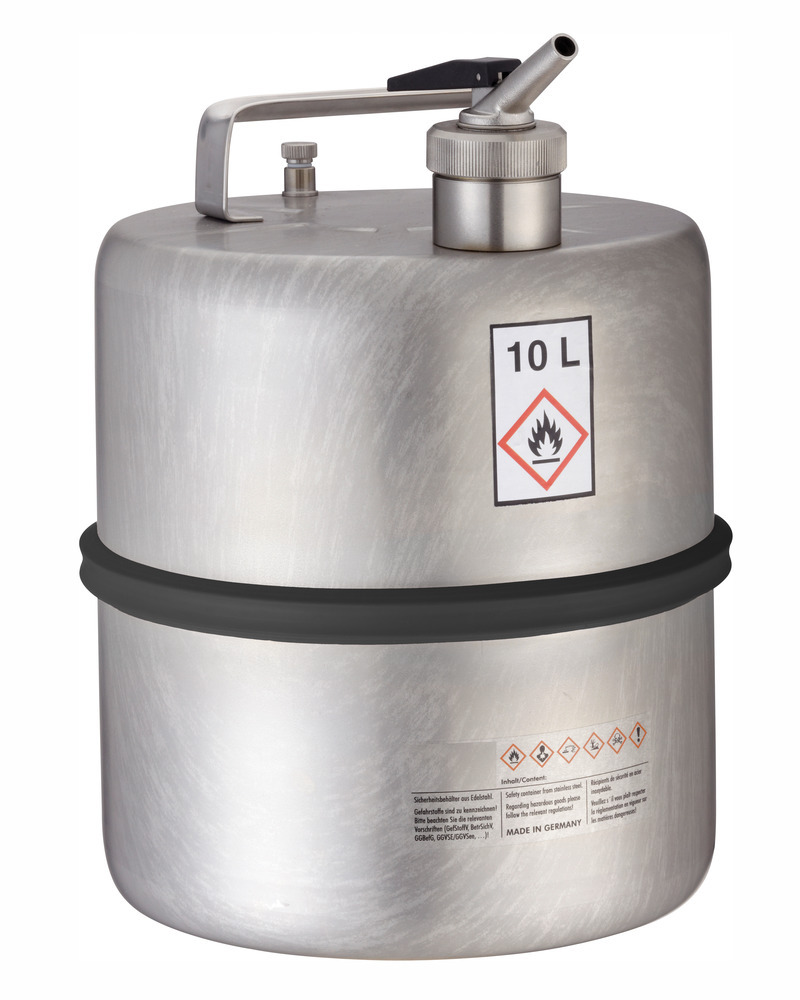
Stainless steel safety cans: Provide greater corrosion resistance than standard steel, making them suitable for more demanding environments and compatible substances.
Polyethylene safety cans: Lightweight and corrosion-resistant, with suitability for a range of aggressive chemicals where polyethylene is chemically compatible.
Safety Features of DENIOS Safety Cans
Depending on the model and intended application, DENIOS safety cans are available with features designed to support safer handling of hazardous liquids:
Self-closing fine dosing taps: The container opens only while the tap is being operated and closes automatically afterwards. This helps reduce uncontrolled leakage if the can is released or accidentally dropped, while also supporting controlled dosing.
Integrated flame arresters: Selected safety cans incorporate stainless steel flame arresters designed to help prevent flames or sparks from passing into the container. This provides an important additional safeguard when handling flammable liquids.
Pressure relief valves: Where pressure builds inside a suitable container due to its contents, integrated pressure relief valves allow excess pressure to escape before automatically resealing. This helps reduce the risks associated with potentially hazardous overpressure.
Earthing connections: Selected metal safety cans can be connected to suitable earthing equipment to help dissipate electrostatic charge during filling, transferring or dispensing, reducing the risk of electrostatic sparks when handling flammable liquids.
Impact rings and ergonomic handles: Impact rings help protect smaller, frequently handled cans against damage and deformation, while shaped handles make containers easier to carry, position and pour from during routine use.
The features required will depend on the substance being handled, various risk assessments and how the safety can will be used, so the appropriate model should be selected for the specific application.
What Criteria Should Be Used to Select the Right Safety Can?
Chemical compatibility is particularly important when selecting a container for hazardous liquids. The table below provides an overview of the resistance of stainless steel to selected substances, helping you assess whether this material is suitable for the liquid being handled.
Order Safety Cans from DENIOS
DENIOS combines decades of experience in hazardous material storage and workplace safety with a global network spanning Europe, America and Asia. Our technical specialists can help you identify a safety can suited to the liquid, application and working environment before you place an order.
Explore the DENIOS range of safety cans online or contact our team for practical advice on selecting the right solution for your requirements.
FAQS
What Size Safety Can Do I Need?
Choose a capacity that suits the quantity of liquid required for the task while remaining practical to handle and use. The appropriate size will depend on the application, how frequently the liquid is needed and how the can will be stored or moved.
Are Safety Cans Suitable for Flammable Liquids?
Yes, selected safety cans are designed for compatible flammable liquids. Depending on the model, features such as flame arresters, self-closing fine dosing taps, pressure relief valves and earthing connections may support safer handling, but the can must be suitable for the specific liquid and application.
Can Safety Cans Be Used for Chemicals?
Yes, safety cans can be used for compatible chemicals, including certain aggressive substances. The can material, seals and dispensing components should all be checked for chemical compatibility before use, with steel, stainless steel and polyethylene options available for different requirements.
How Do I Choose the Right Safety Can?
Start with the liquid being handled and check its compatibility with the can material and components. You should also consider the required capacity, dispensing method, working environment, relevant safety features and any approval or regulatory requirements that apply to the intended use.